
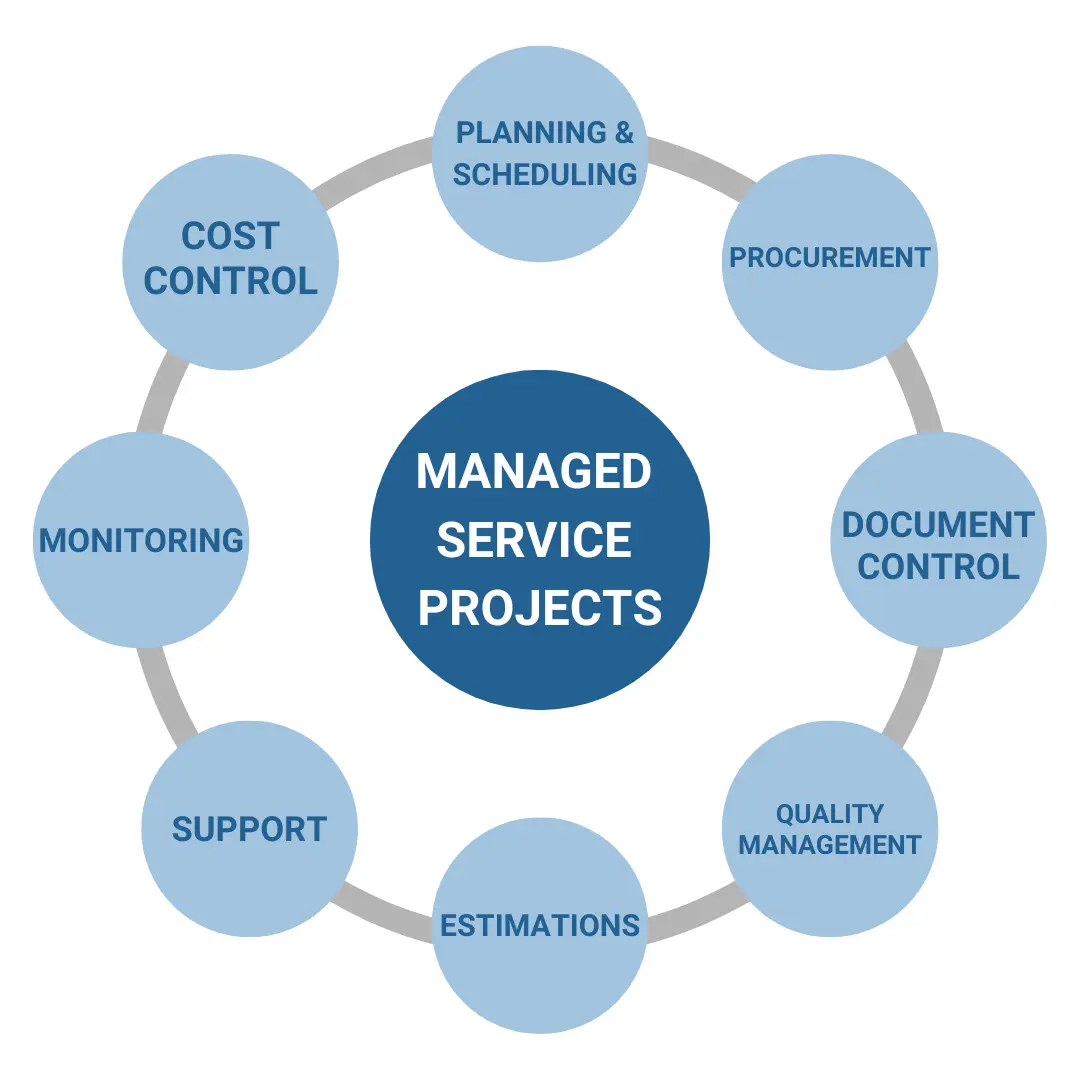
A Managed Services Provider (MSP) is a company that provides a range of managed IT services to businesses on a contract or subscription basis. This allows businesses to outsource their IT needs to a single provider, rather than having to manage them in-house. Managed Service Providers can help free up the time of a CEO to do their management responsibilities by taking on many of the IT-related responsibilities that can be time-consuming and complex for a business leader to manage. They can also provide strategic IT planning and consulting services to help the CEO make informed decisions about the company’s technology investments.
The cost for managed services can vary depending on the specific services provided and the size of the company. Small to medium-sized businesses may pay a few hundred to a few thousand dollars monthly, while larger companies may spend tens of thousands monthly on MSP services.
To assess the need for a managed services, you should consider the following factors:
The choice to adopt a managed service should hinge on your business’s needs and the potential benefits.
Read More: What are Managed IT Services?
The managed service market has expanded as businesses seek to outsource IT for efficiency and cost reduction. According to a report by MarketsandMarkets, the global managed services market is projected to grow from $193.09 billion in 2019 to $296.38 billion by 2024, at a CAGR of 8.8% during the forecast period. The increasing adoption of cloud computing and the growing demand for IT managed services projects are driving the growth of the managed services market.

The managed services model typically includes ongoing monitoring, management, and maintenance of IT systems and infrastructure. This can include services such as network management, data backup and recovery, system updates, and security management. The MSP is responsible for the day-to-day management and support of a business’s IT systems, including troubleshooting issues, performing system updates, and providing technical support to users. This allows the business to focus on its core operations, rather than having to devote capacity to IT management.

Managed services providers (MSPs) often use a combination of different business models to provide their managed services to customers. Here are a few examples of business models that are commonly used by MSPs:
Managed services provider have to consider various factors when selecting a managed services model , such as the services offered, the target market, the level of competition, profitability and scalability, the company’s current and projected capacity and capabilities, the regulatory environment, the level of customer service and support, and the company’s financial resources.
The top MSP team excels in customer service, support, efficiency, and operational effectiveness. Some key characteristics of a high-performing managed services team include:
Strong technical expertise: The team must deeply understand managed technologies, systems, and swiftly resolve arising issues for effective management.
Excellent communication and customer service: The team should be able to communicate with customers and provide prompt and helpful service.
Proactive and preventive maintenance: Focus on proactive prevention through regular monitoring, updates, and maintenance to avoid issues.
Continual improvement: The team must commit to ongoing improvement by staying updated on new tech and best practices for better service.
Strong leadership: The team needs clear structure and leadership, setting goals and holding members accountable for achieving them.
Scalability: The team must be able to scale services to accommodate a growing or evolving customer base.
Embrace new technologies: The team must embrace and understand emerging technologies, like cloud services, automation, and AI, to excel.
Compliance and security expertise: The team must grasp regulations, compliance, and security standards to implement them efficiently and effectively.

IT managed services are outsourced IT services provided by a managed service provider (MSP) under a contract or subscription. Some common IT-managed services include:
Network management: This includes monitoring and supporting devices, such as routers and switches, and troubleshooting network issues.
Data backup and recovery: This includes creating and retaining backups of a business’s data, as well as restoring data in the event of a disaster or data loss.
System updates: This includes installation and configuration of updates, as well as troubleshooting issues.
Cloud services: This includes managing cloud-based services, such as Microsoft Azure or Amazon Web Services.
Helpdesk support: This includes providing technical support to users for a wide range of IT issues.
Remote monitoring and management: This includes monitoring IT systems and infrastructure remotely, which allows for proactive upkeep and fast troubleshooting.
Cybersecurity: This includes implementing cybersecurity measures, such as firewalls, antivirus software and intrusion detection systems, and monitoring for any breaches.
Email filtering: This includes filtering out spam, phishing attempts and other unwanted emails.
Compliance management: This includes ensuring that the business complies with relevant regulations and standards, such as HIPAA, PCI-DSS and SOC.
Virtualization: This includes managing and maintaining virtual servers, workstations and other virtualized resources.
VoIP: This includes managing and maintaining voice-over IP systems and services.
Mobile device management: This includes managing and securing mobile devices such as smartphones, tablets and laptops used by employees.
Network security: This includes implementing network security measures such as firewalls, intrusion detection and prevention systems, and VPNs.
Disaster recovery: This includes developing and implementing disaster recovery plans, as well as testing and maintaining disaster recovery systems.